
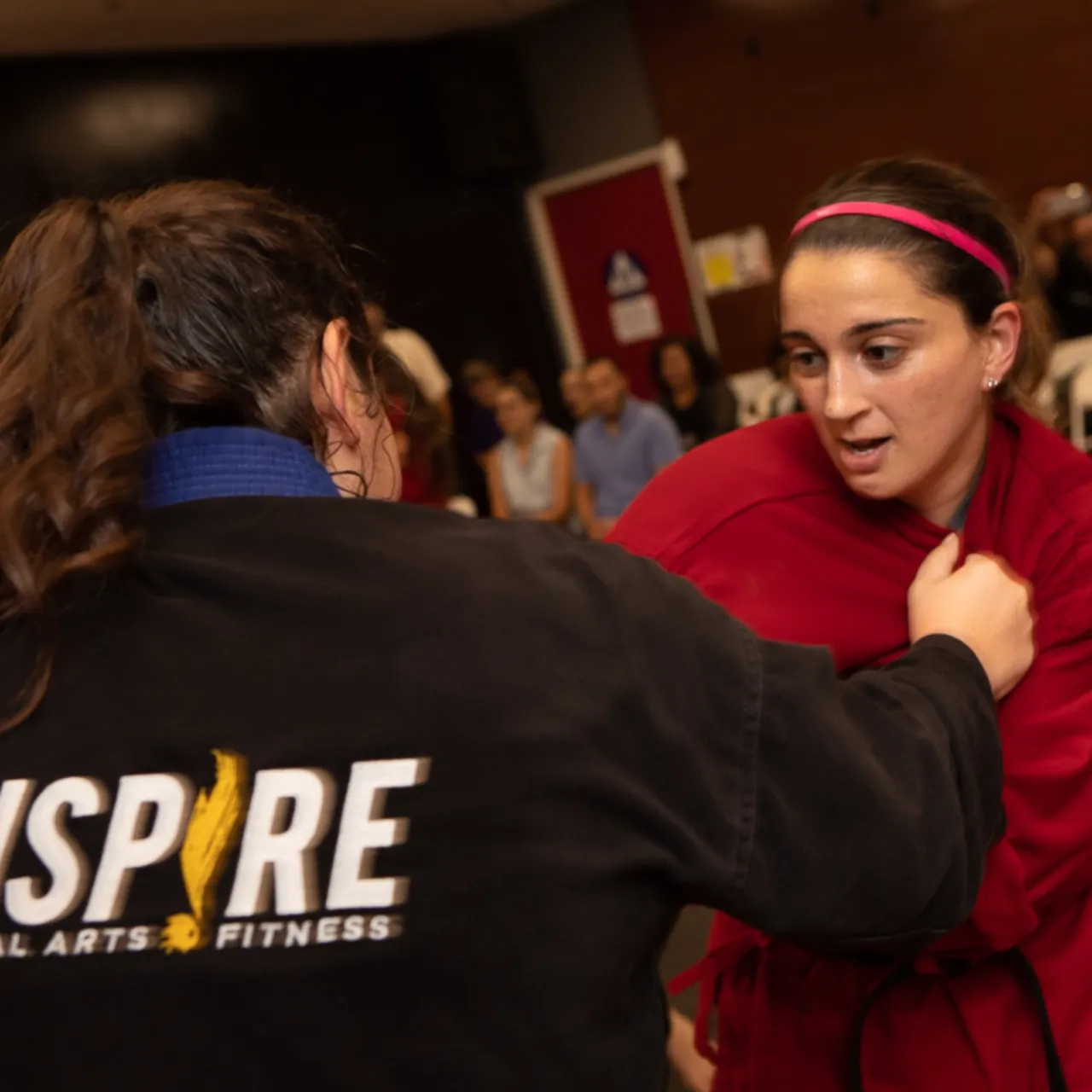
Self-defense isn't about winning a movie fight.
It's about increasing your ability to recognize trouble, make better decisions and respond effectively when necessary.
Physical techniques matter.
But they're only part of the picture.
Good Self-Defense Starts Before Contact
Awareness matters.
Distance matters.
Recognizing escalating behavior matters.
Leaving when you can matters.
Using your voice matters.
A physical confrontation you safely avoid is usually a better outcome than one you “win.”
Techniques Need Context
Learning a technique in isolation isn't enough.
Students need to understand questions such as:
What problem is this technique designed to address?
What position am I in?
Where is the danger?
Can I disengage?
What happens if the first attempt doesn't work perfectly?
Training should build understanding, not just memorization.
Real Self-Defense Is Messy
Real situations don't happen on command.
People don't stand perfectly still.
Stress changes how people react.
No responsible martial arts school should guarantee that a particular technique makes somebody invincible.
Training develops options.
It doesn't eliminate risk.
The Goal Is Capability, Not Fear
Self-defense education shouldn't make students afraid of the world.
It should help them become more aware of choices.
Pay attention.
Set boundaries.
Avoid unnecessary danger.
Know when to leave.
Develop physical skills you can call upon if they're genuinely needed.
That's a far more useful definition of self-defense than simply learning how to hit somebody.
Explore practical martial arts training through Inspire's 3-Class Discovery Course.